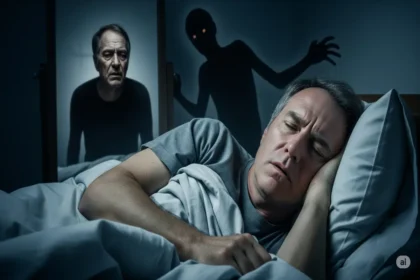


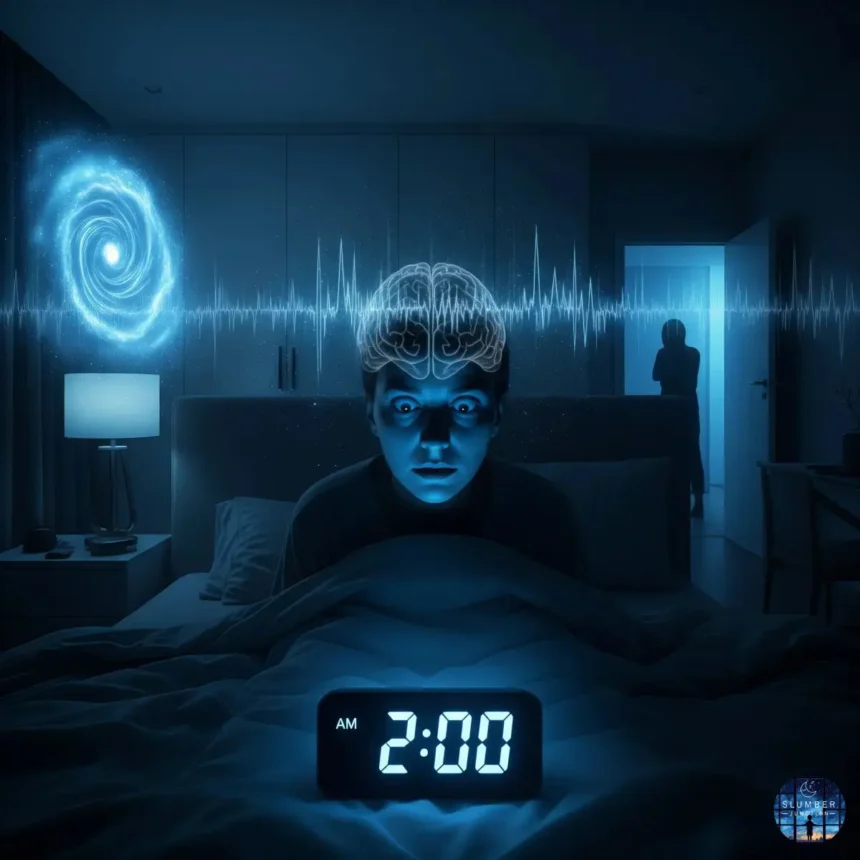
It’s 2 A.M. Your eyes snap open. The house is silent, the world dark, yet here you are, wide awake, staring at the ceiling. No alarm, no noise, no obvious reason—but it’s the third night this week you’ve woken up at this exact hour. Sound familiar? You’re not alone. Countless people report this eerie phenomenon, often dubbed the “2 AM Mystery.” It’s as if your body has an internal alarm clock you didn’t set, rousing you at the same ungodly hour night after night. But why? And more importantly, how can you turn this frustrating quirk into something useful? Let’s unravel the science behind these midnight wake-ups and explore practical ways to harness them, drawing on biology, psychology, and even a dash of ancient wisdom.
Why 2 AM? The Science of Your Internal Clock
That 2 a.m. wake-up isn’t random—it’s your body’s internal clock, or circadian rhythm, at work. This 24-hour biological cycle governs when you feel sleepy or alert, driven by a tiny region in your brain called the suprachiasmatic nucleus. It’s like your personal mission control, syncing your body with the day-night cycle through cues like light and temperature. But here’s where it gets interesting: your circadian rhythm isn’t perfectly uniform. It includes natural dips in alertness, and one of those dips often hits between 1 a.m. and 3 a.m., a time when your body temperature drops and melatonin (the sleep hormone) peaks.
Historically, humans didn’t always sleep in one solid block. Before artificial lighting, people practiced “segmented sleep,” sleeping in two chunks—first sleep, a midnight wakeful period, then second sleep. Historians like Roger Ekirch have found evidence of this in pre-industrial texts, where people used that midnight wakefulness for quiet tasks like praying, reading, or even socializing. Your 2 a.m. wake-up might be your body tapping into this ancient pattern, especially if stress, diet, or irregular schedules disrupt your modern “monophasic” sleep.
I experienced this myself last month. Deadlines were piling up, and like clockwork, I’d wake at 2:17 a.m., my mind racing with to-do lists. At first, I fought it, tossing and turning, willing myself back to sleep. But the more I learned, the more I wondered: could this be my body’s way of signaling something? And could I use it instead of cursing the clock?
Other factors can trigger these wake-ups. Stress or anxiety can spike cortisol, your body’s stress hormone, which naturally rises in the early morning to prepare you for waking. If you’re stressed, this cortisol surge can hit too early, jolting you awake. Medical issues like sleep apnea, acid reflux, or even a full bladder can also play a role. Even your evening habits—too much caffeine, a late workout, or screen time—can throw your circadian rhythm off-kilter, landing you in that 2 a.m. limbo.
The Deeper Layers: What Your Body Might Be Telling You
Beyond biology, your 2 a.m. wake-ups might carry deeper meaning. In traditional Chinese medicine, for instance, specific hours of the night are linked to organs and emotions. The 1 a.m. to 3 a.m. window corresponds to the liver, associated with processing emotions like anger or frustration. While not scientifically proven, this perspective suggests that unresolved stress or emotional tension could manifest as wakefulness during this time. I don’t buy into every ancient theory, but when I started journaling my 2 a.m. thoughts, I noticed a pattern: my mind often circled back to work stress or unresolved arguments. Coincidence? Maybe. But it got me thinking about what my body was trying to process.
Psychologically, these wake-ups can also signal your brain’s attempt to problem-solve. During sleep, your brain cycles through stages, including REM (rapid eye movement) sleep, where it processes emotions and memories. A 2 a.m. wake-up often happens after a REM cycle, when your mind is most active. If you’re grappling with a big decision or emotional weight, your brain might nudge you awake to chew on it, like a dog with a bone. This explains why those middle-of-the-night thoughts feel so vivid—and often so hard to shake.
Turning the 2 AM Mystery Into an Opportunity
Instead of dreading these wake-ups, what if you saw them as a gift—a pocket of quiet in a noisy world? That 2 a.m. stillness, free from notifications and demands, can be a rare chance to tap into creativity, reflection, or even productivity. Here’s how to stop fighting the mystery and start using it, with practical tips to make it work for you.
Step 1: Rule Out the Obvious
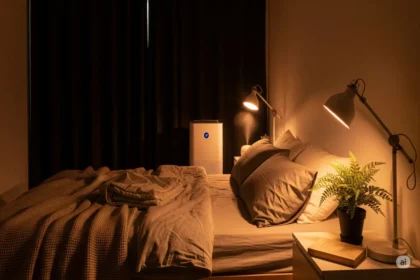
Before you embrace your 2 a.m. wake-ups, make sure they’re not caused by something fixable. Try these tweaks to improve your sleep environment and habits:
After a week of cutting out late coffee and dimming my phone, my 2 a.m. wake-ups became less frequent—but when they happened, I was ready to use them.
Step 2: Embrace the Wake-Up
If you’re still waking at 2 a.m., don’t fight it. Lying there stressing about lost sleep only makes things worse (been there, done that). Instead, lean into the moment with these strategies:
Step 3: Harness the Quiet for Productivity
If you’re awake for more than 20 minutes, get out of bed to avoid associating your bed with wakefulness. Keep the lights low and try these low-key activities:
After 20-30 minutes, try returning to bed. If sleep doesn’t come, repeat the cycle, but avoid bright lights or stimulating tasks like checking email.
Step 4: Reset for Better Sleep
To reduce 2 a.m. wake-ups long-term, fine-tune your sleep hygiene:
The Bigger Picture: Listening to Your Body
The 2 a.m. mystery isn’t just a quirk—it’s your body and mind trying to tell you something. Maybe it’s stress, maybe it’s biology, or maybe it’s a nod to our ancestors’ segmented sleep. Whatever the cause, it’s a chance to slow down, reflect, and tap into a quiet moment the world rarely offers. By addressing the root causes and using these wake-ups productively, you can turn a frustrating habit into a source of clarity and creativity.
For me, those 2 a.m. moments have become less of a curse and more of a strange gift. One night, I wrote a poem. Another, I sorted out a family issue that had been nagging me. Most nights, I just breathe and drift back to sleep, feeling a little more in tune with myself. So, the next time you wake at 2 a.m., don’t panic. Take a deep breath, grab your notebook, and see where the mystery leads you. You might just find it’s the most productive hour of your night.
Disclaimer: The information provided in this article is for general informational purposes only and does not constitute medical advice. It is not a substitute for professional medical advice, diagnosis, or treatment. Always seek the advice of your physician or other qualified health provider with any questions you may have regarding a medical condition. Never disregard professional medical advice or delay in seeking it because of something you have read on this website.
Disclaimer: These are the personal opinions of the author.