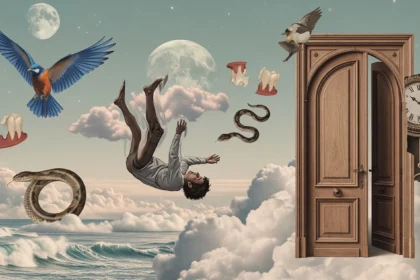



The sensation is universal, primal, and often terrifying: one moment you’re drifting peacefully, the next you’re plummeting through an endless void, a sudden jolt awakening you with a gasp and a pounding heart. Falling dreams are among the most common and vividly remembered dream experiences, transcending cultures and ages. For millennia, humanity has grappled with their meaning, seeking to decipher the cryptic messages hidden within these nightly descents. Are they mere physiological quirks, or do they offer profound insights into the anxieties, aspirations, and unresolved conflicts of our waking lives? Modern psychology and neuroscience are increasingly illuminating the answers, suggesting that these dreams are far more than random nocturnal theatrics; they are potent symbolic narratives crafted by our subconscious, revealing the intricate landscape of our inner world.
The immediate, visceral reaction to a falling dream is often one of fear and helplessness. This powerful emotional response hints at their significance. While some instances of feeling like you’re falling just as you drift off to sleep can be attributed to a common physiological phenomenon known as a hypnic jerk, the recurring, narrative-driven falling dreams that occur deeper in the sleep cycle often carry a deeper psychological weight. These are the dreams that linger, prompting us to ponder what our minds are trying to tell us.
The Hypnic Jerk: A Physiological Prelude
Before diving into the deeper psychological interpretations, it’s worth acknowledging the “hypnic jerk” – that sudden, involuntary muscle contraction that often accompanies the sensation of falling just as you’re nodding off. This phenomenon, also known as a sleep start, is a normal and harmless part of the transition from wakefulness to sleep (NREM Stage 1).
Scientists believe hypnic jerks are a result of a slight miscommunication between the brain and muscles as the body relaxes. As your muscles begin to lose tension and your breathing and heart rate slow, your brain might misinterpret these signals, perceiving the relaxation as a literal fall. The brain then sends a jolt to the muscles, attempting to “catch” you, resulting in the sudden twitch and the feeling of falling. Factors like stress, fatigue, caffeine, and irregular sleep schedules can increase the likelihood of experiencing hypnic jerks. So, while they can certainly be startling and mimic the sensation of a falling dream, they are generally a distinct physiological event, not necessarily laden with complex symbolic meaning. However, the more vivid, narrative-rich falling dreams that occur during REM sleep or deeper NREM stages are where the psychological exploration truly begins.
The Loss of Control: A Central Theme
At the heart of many falling dreams lies a pervasive sense of losing control. This is perhaps the most widely accepted psychological interpretation, echoed across various schools of thought. In our waking lives, we strive for stability, predictability, and a sense of agency. When these pillars are shaken, whether by external circumstances or internal struggles, our subconscious mind often translates this feeling into the vivid imagery of a fall.
Consider Sarah, a marketing executive who recently took on a demanding new role. She found herself plagued by recurring dreams of falling from great heights, often just before a major presentation or a tight deadline. In her waking life, Sarah felt overwhelmed by the increased responsibilities and the fear of not meeting expectations. Her dreams, in this context, were a direct reflection of her anxieties about losing her footing in her career, feeling inadequate, or being unable to manage the immense pressure. The dream wasn’t a prophecy; it was a mirror, reflecting her internal state of feeling out of control.
This “loss of control” can manifest in various aspects of life:
- Career or Academic Pressure: Feeling overwhelmed by work, fear of failure, or a sense of not being able to keep up.
- Relationship Instability: Experiencing insecurity in a romantic relationship, a strained family dynamic, or a crumbling friendship.
- Financial Worries: Anxiety about debt, job security, or an uncertain financial future.
- Major Life Transitions: Moving to a new city, starting a new chapter, or facing significant changes that bring uncertainty and a feeling of being unmoored.
- Personal Insecurity: A general sense of inadequacy, low self-esteem, or a fear of not being “good enough.”
The dream acts as a signal, a subconscious alarm bell urging us to address the areas in our waking lives where we feel powerless or unstable.
Anxiety and Stress: The Emotional Undercurrent
Falling dreams are frequently intertwined with feelings of anxiety and stress. When our daily lives are filled with worries, unresolved conflicts, or mounting pressure, our brains work overtime, even during sleep, to process these emotional burdens. REM sleep, in particular, is a crucial stage for emotional regulation, and it’s during this phase that emotionally charged dreams, including anxiety dreams, are most prevalent.
Dr. Michelle Drerup, a sleep psychologist, notes that high stress levels can lead to more frequent and vivid dreams, as the brain’s emotional processing system goes into overdrive. A falling dream, in this context, can be the brain’s symbolic representation of feeling overwhelmed, teetering on the brink, or being unable to cope with the weight of one’s anxieties. It’s a manifestation of the “fight or flight” response being activated in a simulated environment, a way for the brain to rehearse coping mechanisms for perceived threats.
For example, a student facing a crucial exam might dream of falling off a cliff, symbolizing their fear of academic failure and the immense pressure they feel. The dream, while distressing, serves as an emotional outlet, allowing the brain to process and potentially mitigate some of that waking anxiety.
The Symbolic Landscape: Deeper Meanings
While loss of control and anxiety are common threads, the specific context and details of a falling dream can offer more nuanced interpretations. Dream analysis, while not an exact science, often draws on universal symbols and personal associations to uncover deeper meanings.
- Falling into Water: Water in dreams often symbolizes emotions. Falling into calm water might suggest a surrender to one’s emotions or a need for emotional cleansing. Falling into turbulent, dark water, however, could indicate feeling overwhelmed by emotions, a fear of drowning in one’s feelings, or a sense of being unsupported.
- Falling from a Building or Cliff: These often reinforce the theme of losing control from a position of perceived stability or power. It could signify a fear of professional downfall, a loss of social standing, or a dramatic shift in one’s life circumstances.
- Falling and Hitting the Ground: Interestingly, some interpretations suggest that hitting the ground in a falling dream can be a positive sign, symbolizing a “landing” or a resolution to a difficult situation. It might mean you’ve reached rock bottom and are now ready to rebuild, or that a period of uncertainty is coming to an end. It can also represent a necessary confrontation with reality.
- Being Pushed: If you dream of being pushed, it might reflect feelings of betrayal, being manipulated, or a sense that external forces or individuals are causing you to lose your balance in life. If the pusher is someone you know, it could point to unresolved conflicts or perceived threats from that relationship.
- Slipping or Tripping: These dreams might indicate a fear of making mistakes, a lack of self-confidence, or feeling unsteady on your chosen path. It suggests minor setbacks that could lead to a larger fall if not addressed.
It’s crucial to remember that dream interpretations are highly subjective and deeply personal. What a falling dream means for one person might be entirely different for another, depending on their unique life experiences, cultural background, and current emotional state. A dream journal can be an invaluable tool here, allowing individuals to record their dreams and look for recurring patterns or connections to their waking lives.
An Evolutionary Perspective: A Rehearsal for Survival?
Some evolutionary theories of dreaming, such as Antti Revonsuo’s Threat Simulation Theory, propose that dreams, particularly those involving threats like falling, serve an adaptive purpose. In this view, dreams are a “safe space” for the brain to simulate threatening scenarios, thereby honing our fight-or-flight responses and improving our chances of survival in the face of real danger.
From an evolutionary standpoint, a sudden fall or a loss of balance would have been a significant threat to our ancestors. Dreaming about such scenarios could have provided a low-stakes environment to practice reactions, assess risks, and refine motor responses. While modern humans rarely face the direct threat of falling from a tree, the underlying neural mechanisms for simulating threats might persist, manifesting as dreams about contemporary anxieties that still trigger our ancient survival instincts. The fear response in a falling dream, therefore, could be a vestige of this ancient survival mechanism, a nightly rehearsal for potential dangers.
Embracing the Message: A Path to Self-Awareness
While falling dreams can be unsettling, they are rarely omens of impending doom. Instead, they are often valuable messages from our subconscious, urging us to pay attention to aspects of our waking lives that require our focus and care. They are a powerful reminder that our inner world is constantly communicating with our conscious mind, offering insights and prompting self-reflection.
If you find yourself frequently experiencing falling dreams, consider it an invitation to explore the areas of your life where you might feel a lack of control, heightened anxiety, or a sense of instability. Are you clinging too tightly to a situation that needs to be released? Are you overwhelmed by new responsibilities? Is there a fear of failure holding you back?
Engaging in stress-reducing activities like mindfulness, meditation, journaling, or even talking to a trusted friend or therapist can help process these underlying anxieties. Improving sleep hygiene – creating a dark, quiet, and cool sleep environment, avoiding caffeine and alcohol before bed, and maintaining a regular sleep schedule – can also contribute to more restful sleep and potentially reduce the frequency of distressing dreams.
The psychology of falling dreams is a captivating field, blending ancient wisdom with modern scientific inquiry. These nightly descents, whether a fleeting hypnic jerk or a vivid narrative, serve as profound reminders of our vulnerability, our resilience, and the continuous dialogue between our conscious and subconscious selves. By listening to these nocturnal narratives, we gain a deeper understanding of our fears, our strengths, and the ever-unfolding story of our waking lives. They are not just dreams; they are whispers from within, guiding us toward greater self-awareness and a more balanced existence.
Disclaimer: The information provided in this article is for general informational purposes only and does not constitute medical advice. It is not a substitute for professional medical advice, diagnosis, or treatment. Always seek the advice of your physician or other qualified health provider with any questions you may have regarding a medical condition. Never disregard professional medical advice or delay in seeking it because of something you have read on this website.